
2026: The International Year of the Woman Farmer—A Fresh Perspective
- gajendra dixit

- Mar 9
- 6 min read
Quick Summary
The year 2026 has been declared the International Year of the Woman Farmer by the Food and Agriculture Organization (FAO) of the United Nations, highlighting the critical yet often overlooked role women play in agriculture worldwide. In India, women contribute significantly to farming activities, making up nearly half of the agricultural workforce. Despite their immense contribution, many women farmers lack access to land ownership, fair wages, training, and financial resources. Recognizing their role is a crucial step toward building sustainable agriculture, empowering rural communities, and ensuring food security. Strengthening initiatives through government schemes, NGOs, and CSR projects for NGOs can significantly support women farmers and improve livelihoods.
Understanding the Significance of the International Year of the Woman Farmer
The Food and Agriculture Organization (FAO) of the United Nations has declared 2026 as the International Year of the Woman Farmer. This declaration reflects the global recognition that women farmers are fundamental to sustainable agriculture, food security, and rural development.
The FAO works toward creating a world without hunger by promoting sustainable agricultural practices, reducing poverty, and ensuring equitable access to resources. Central to its mission are the “Four Betters”:
Better production
Better nutrition
Better environment
Better life – leaving no one behind
Interestingly, these principles closely reflect the roles women traditionally play in families and communities as nurturers, caregivers, and providers. Women farmers embody these values by contributing tirelessly to food production and agricultural sustainability.
Women Farmers: The Backbone of Agriculture
The term “farmer” often evokes the image of a man working in the fields. However, this perception overlooks the enormous role women play in agricultural activities.
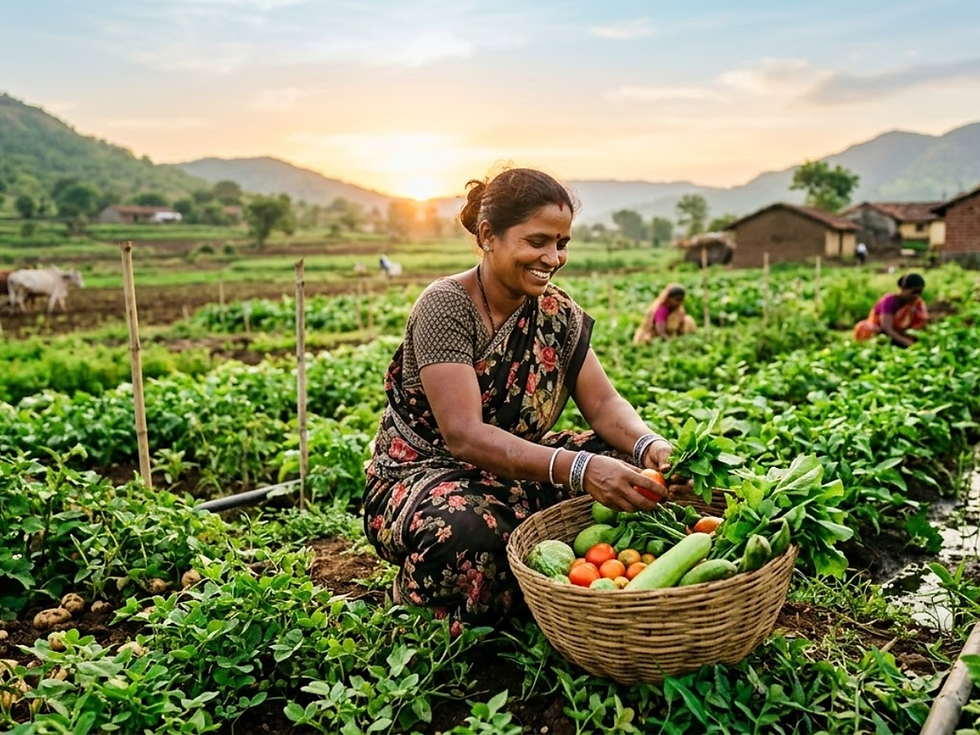
Across India and many parts of the world, women are actively involved in farming tasks such as sowing, transplanting, harvesting, livestock management, and post-harvest processing. Despite their contribution, women farmers rarely receive equal recognition or economic benefits.
Many women farmers also manage dual responsibilities—maintaining their households while working long hours in fields. Their work sustains not only their families but also the broader agricultural economy.
Key Statistics on Women Farmers in India
India is primarily an agrarian economy, and women play a vital role in agricultural production. Data from various agricultural surveys and census reports highlight the scale of their contribution:
Around 80% of economically active rural women in India are engaged in agriculture.
There are approximately 61.5 million female agricultural labourers, forming nearly 42% of the agricultural workforce.
Nearly 75% of rural women participate in farming due to rising male migration rather than personal choice.
Women perform most labour-intensive tasks such as transplanting, harvesting, and weeding, particularly in crops like rice.
More than 50% of labour in crops such as sugarcane is contributed by women.
Despite their contribution, only about 12–14% of women farmers own land.
Globally, the situation is similar. Of the estimated 525 million smallholder farmers worldwide, less than 15% are women landowners.
These figures highlight a significant gap between contribution and recognition.
Challenges Faced by Women Farmers
While women farmers contribute substantially to agricultural productivity, they face several challenges that limit their growth and empowerment.
Lack of Land Ownership
Land ownership is crucial for financial security and decision-making power in agriculture. However, cultural norms and inheritance practices often prevent women from owning agricultural land.
Without ownership rights, women struggle to access credit, subsidies, and government support schemes.
Limited Access to Training and Technology
Many women farmers rely on traditional farming methods passed down through generations. While valuable, these methods sometimes limit productivity and adaptability to climate change.
Access to modern agricultural training, climate-resilient techniques, and digital tools can significantly improve productivity and income.
Financial Constraints
Access to credit remains a challenge for women farmers. Without financial support, they cannot invest in better seeds, equipment, or irrigation systems.
Social and Structural Barriers
Women farmers often face social biases, wage disparities, and limited representation in agricultural decision-making bodies.
These challenges highlight the need for targeted interventions and collaborative initiatives.
Organizations Supporting Women Farmers in India
Several organizations are actively working to empower women farmers and strengthen their role in agriculture.
MAKAAM (Mahila Kisan Adhikaar Manch)
MAKAAM is a national platform advocating for women farmers’ rights, particularly land ownership and recognition as farmers.
SEWA (Self Employed Women’s Association)
SEWA focuses on strengthening women-led enterprises by providing training, tools, and marketing support to increase income and efficiency.
ActionAid India – BASANT Initiative
ActionAid works with women farmers in regions such as Bundelkhand to promote sustainable, chemical-free farming practices and climate resilience.
Digital Green
Digital Green leverages technology through tools like FarmerChat, which provides localized agricultural advice via voice and video platforms.
PRADAN (Professional Assistance for Development Action)
PRADAN works at the grassroots level to build community capacity and improve rural livelihoods.
RUDI (Rural Distribution Network)
RUDI is an initiative by SEWA that supports women farmers by procuring produce at fair prices and employing women in processing and distribution.
Government Schemes Supporting Women Farmers
The Government of India has introduced several programs to empower women farmers and improve agricultural livelihoods.
Mahila Kisan Sashaktikaran Pariyojana
This initiative focuses on empowering women farmers by improving access to resources, training, and technology.
Kisan Credit Card (KCC)
The KCC scheme enables farmers to access affordable credit for agricultural needs.
National Food Security Mission (NFSM)
NFSM promotes sustainable agricultural practices and ensures food security while supporting women farmers with dedicated funding.
National Livestock Mission (NLM)
This mission provides training and financial support for livestock farming, benefiting women engaged in dairy and animal husbandry.
Notably, many government programs allocate at least 30% of funding specifically for women farmers, emphasizing gender-inclusive agricultural development.
The Role of CSR in Supporting Women Farmers
Corporate Social Responsibility (CSR) initiatives can play a vital role in empowering women farmers and strengthening rural economies.
Companies increasingly support agriculture-related initiatives through CSR projects for NGOs, focusing on areas such as:
Agricultural training programs
Sustainable farming practices
Women-led farming cooperatives
Climate-resilient agriculture initiatives
Market access and digital literacy
Organizations offering CSR consulting services in Mumbai often help corporates design and implement impactful projects that support women farmers and rural communities.
Additionally, NGO capacity building services ensure that grassroots organizations working with women farmers have the resources, training, and operational support required to scale their initiatives effectively.
Key Areas of Support for Women Farmers
As global attention turns toward women farmers, several key areas require urgent focus.
Education
Women farmers need access to quality education and learning opportunities that extend beyond basic literacy. Education enables them to understand markets, financial systems, and agricultural technologies.
Agricultural Training
Training in modern agricultural practices—such as organic farming, multilayer cropping, and climate-resilient farming can significantly enhance productivity and sustainability.
Microfinance and Financial Inclusion
Microfinance programs designed specifically for women farmers can provide the capital needed to start or expand agricultural ventures.
Land Ownership and Legal Rights
Strengthening inheritance laws and ensuring women’s representation as landowners is essential for long-term security and empowerment.
Safety and Legal Protection
Women farmers need access to legal awareness programs, financial literacy initiatives, and safety mechanisms to protect their rights and livelihoods.
Building a Sustainable Future Through Women Farmers
Women farmers are central to the future of sustainable agriculture and food security. Their resilience, dedication, and knowledge have supported agricultural systems for generations.
Recognizing their contributions and providing them with the necessary resources, education, and financial support will not only empower women but also strengthen rural economies and food systems.
Collaborative initiatives involving governments, NGOs, and corporates—especially through CSR initiatives supporting agriculture and rural development—can create lasting impact.
Partner with Us to Empower Women Farmers
Supporting women in agriculture is essential for building resilient communities and sustainable food systems. Through well-planned CSR initiatives, organizations can contribute to agricultural training, financial inclusion, and rural development.
If your organization is looking for CSR consulting services in Mumbai to design and implement impactful programs, we can help turn your vision into measurable outcomes.
Get in touch with us to explore collaborative opportunities.
FAQ’s
Q.1 What is the International Year of the Woman Farmer?
The International Year of the Woman Farmer, declared by the FAO for 2026, recognizes the critical role women play in agriculture and promotes initiatives to support their empowerment.
Q.2 Why are women farmers important for agriculture?
Women farmers contribute significantly to agricultural labour, food production, and rural livelihoods, making them essential for food security and sustainable farming systems.
Q.3 What challenges do women farmers face in India?
Women farmers often face challenges such as limited land ownership, lack of financial access, inadequate training opportunities, and social barriers.
Q.4 How can CSR initiatives support women farmers?
CSR initiatives can support women farmers through agricultural training programs, financial support, sustainable farming projects, and capacity-building programs for NGOs.
Q.5 What government schemes support women farmers in India?
Key government initiatives include the Mahila Kisan Sashaktikaran Pariyojana, Kisan Credit Card scheme, National Food Security Mission, and National Livestock Mission.


Comments